Factors Related to Injury That We Can’t Control & How to Manage That
Overall, there are about nine major factors that are related to injury, or could determent performance:
Everything you do in your everyday life can either help you with your performance, or the opposite, it could decrease performance and even result in injuries. There are things that we do in our everyday that you can control, and some that you can’t.
In today’s blog I am going to discuss the factors in which we can’t control, which include travel/work, stress, past injuries and you could even put sleep in there. With these factors I will include ways that you can manage these to the best of your ability to try to prevent any detrimental effects.
TRAVEL/WORK
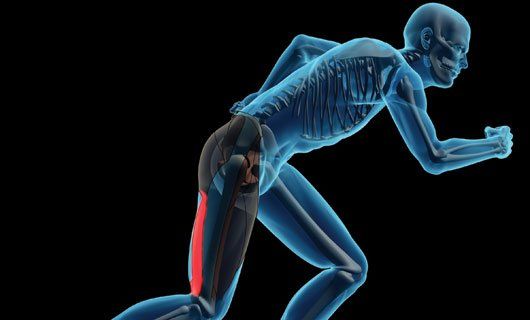
When this happens, your hip flexors become shortened under a compressive state. Not only are you in a compressive state in the hip flexors, but it directly affects the piriformis (in the glutes) which then compresses on the sciatic nerve… No wonder why there is so many complaints of back pain! Driving with one leg you will have a lot of dorsiflexion (toe towards the shin) and plantarflexion (toe pointed), as well as some hip external/internal rotation (one more than the other depending how soft your seat is and how much your hips sink into it… which is not a good thing by the way). This will travel up the kinetic chain, tight calves, tight shins, tight hamstrings, weak glutes, especially on one side more than the other because of your driving foot.
Now, your posture. I myself always catch myself hunching over with a forward head tilt the longer my drive is. When we slouch over like that, we are shortening the hip flexors even more, we are shutting off our diaphragm (sits under the diaphragm that helps controls our breathing), tightening our pectorals muscles in our chest, weakens the muscles around our shoulder blades, and our head tilt is pulling our center of gravity forward which makes us imbalanced and puts a lot of force onto our quads when we walk/run/and even lift.
This is the same exact circumstance when you work in an environment where you do a lot of sitting, and like driving with one foot… when you cross your legs when you work. You will see that imbalance happen again.
All of this will carry over into your physical activity of choice (lift, class, run, play sports, etc.). How much we sit, drive, walk and stand (or even sleep) poorly for 23 hours of the day, that 1 hour of lifting or taking a class in a dysfunctional state will leave you at large risk of injury.
What can you do?
Your best bet is taking trigger point/mobility breaks! Stretch will help some, but you really need to dig into that fascia and get more oxygen and blood flow into those areas of constant tightness.
Areas to focus on trigger pointing: the psoas (deep hip flexor muscle), t-spine, piriformis, pecs, calves
Areas to focus on mobility: T-Spine Extensions, Chest Opener, Hip Extension
Set reminders on the road to check your posture. After every song on the radio, do a self-check on your posture and to make sure your neck isn’t jolted forward, that you are nice and aligned! If you’re at work set your timer on your phone or your watch!
STRESS
What happens in our body is there's a little control center in our brains, called the hypothalamus, that sends our stress hormones to cope with the situation at hand. Your heart rate increases, your breathing rate increases, and you become tense. This was designed in our bodies to “fight or flight”, preparing our bodies to act quickly. Now, imagine your body doing this day, after day, after day.
Now your body is in a chronic stress state and you are trying to perform at your physical best, putting physical stress on our bodies. Now you are in a physiological stressed state, on top of being under physical stress. Those stress hormones that are released from the hypothalamus are telling the adrenal glands to release cortisol and adrenaline to increase our heart beat and rush blood to our muscles, heart and other organs…. Sounds a lot like what happens when we exercise. Imagine your body going through these processes, and now you are putting more on top of that. At some point, you’re going to run out of matches to burn and you will eventually burn yourself out mentally and physically. But you tell yourself to just push through it.
How do we control our stress?
You need to find “your thing” that will put you in a rest and digest state. Maybe it’s going for a quiet walk, listening to music, going to yoga, focusing on your breathing. ANYTHING that can set you away from the “right now”.
The athletes that I work with, before big practices or games right around finals, instead of lifting we would go through rebalancing the body and then ending with a meditation session for just 10-15 minutes. What we do is a body scan, starting from the feet and focus on that specific body part, putting our energy into relaxing that body part and releasing any tightness. We then work up the body, piece by piece. From there, when they are completely relaxed, we do some visualization of game situations, step by step. It’s rare for these college kids to get a solid 15 minutes of complete silence and to focus on their bodies and themselves rather than everything else around them in their lives. Afterwards they feel amazing. They gave their bodies that rest and digest state to reset the system.
PAST INJURIES
Injuries happen. You could be doing all the right things, and just one little movement or one bad play, or even just accidentally falling down the stairs, can create a huge setback. These things happen and it’s just out of our control. The best thing you could do for yourself, is not let it stop you from training. You can train AROUND injuries instead of sitting on the side, all slouched over like sack of potatoes until you can play or compete again. Don’t let it be an excuse. If you become a couch potato from an injury, you will lose everything you just worked hard for in about a week-week and a half. You’ll be weak and imbalanced.
The greatest mistake that I see is athletes or clients that are injured for a while and they just sit around waiting for it to heal. Then once the injury is healed, they just jump right back in and try to compete at the same level they were at before the injury. HUGE RISK OF INJURY! That’s why it’s SO common for athletes who tore an ACL, end up tearing the other one.
And now say you are in a brace, that brace will mentally make you wearier of your movements. Sometimes being too cautious isn’t good either. The combination of weakness and not working through full ranges of motion you once were able to (because the brace is restricting you from movement and proper muscle activation) will put you at a greater risk for injury as well.
What to do?
-Train around the injuries or limitations, make sure you’re doing SOMETHING to make sure you’re maintaining strength.
-Make sure you’re completing all the mobility and strengthening exercises that your athletic trainer or physical therapist gave you. You are always at risk for reinjuring yourself.
-Try to train without the brace every now and then. I know it’s a comfort thing for most people, but sometimes braces are there just as an aid as it doesn’t really solve the problem that’s going on. If you reactivate muscles that weren’t properly working before and strengthen around the joint (let’s say the knee for example) then you might be able to come back stronger without the brace, rather than relying on the brace to do everything for you.
-Don’t let it define you. Coming back from injuries can be more mental than anything! Don’t let that injury control your mind because your mind is what creates movement!
SLEEP
Ways to help this if you don’t sleep well?
These are all the risk factors that are pretty much out of your control. They will negatively impact your performance and increase your risk of injury. Doing your best to at least MANAGE these risk factors will help create a better, healthier, and a more bad-ass version of yourself. All these factors tie into one another.
Stay tuned to my next blog where I will go into the other factors (that you can control) that will affect your performance!
Recent Posts