
MCT – What is it and why you should be doing it
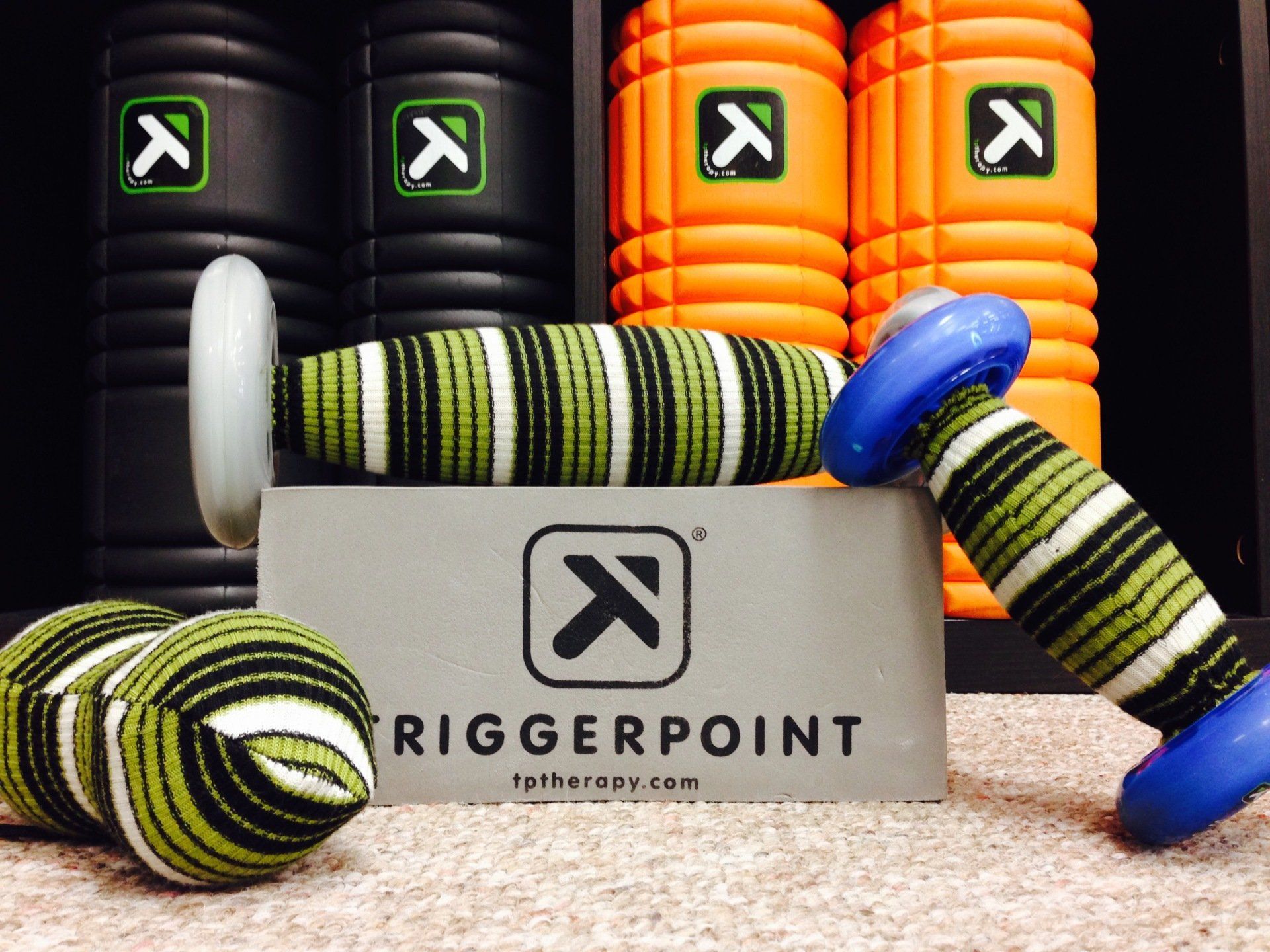
Myofascial Compression Techniques or MCT for short. Many of you know it around CPC as Trigger Point. It is essential component to 99% of our personal sessions conducted. I’d also venture a guess that over half of our subscribers work out several tight spots after a tough class using the array of Trigger Point equipment available for use. We’ve offered seminars and classes to introduce the techniques and provide an opportunity work through sequences to ensure proper use. As a staff, we have invested a lot of personal time and client time into the ins and outs of Myofascial Compression Techniques.
I’ll begin by stating that MCT is NOT foam rolling. Foam rolling is a great tool to help you warm up for a class or a session and cool down following it. A foam roller can come in varying densities depending on your personal response to discomfort and physical needs. Regardless of which density you prefer to roll with the impact on the soft tissue is not as deep as it will be with the Trigger Point products designed specifically for MCT. Warm up should be just that, an opportunity to bring fresh blood flow to the muscle, awaken the muscle fibers, and create more efficient movement (Stull, Elliott, Howell, 2013). Personally, I use foam rolling along with a dynamic warm up before I jump into a class or workout. MCT should be left as a post-workout recovery tool or as a stand-alone mobility ®generation session. Trust me on this one; there will almost always be some level of discomfort associated with MCT and a physiological response that you do not want to enter a tough workout with. (Stull, Elliott, Howell, 2013)
Before I address how to implement this into your next session, you have to understand the basic science behind myofascial release and the role fascia has in the body.
Defining fascia and its role in the human body is the next logical step in explaining MCT. In the Trigger Point Performance Myofascial Compression Technique manual, Fascia is “a soft tissue that courses through the entire human body.” It was described to us in the MCT course, as gross as this may sound, as the opaque tissue that surrounds the chicken breast. It’s not part of the skin it sits just beneath it. Fascia serves many roles. It is designed to keep the muscle contained within their appropriate compartments; “it helps transmit forces, adapts to movement, remolds itself, and responds to a variety of stimuli.” These stimuli can vary from physical and tangible factors such as “temperature, hydration levels, overuse, injury and immobilization.” Intangible factors, while hard to measure, can wreak havoc on the fascia. Who would have thought anxiety and stress could impact the connective tissue running through your body? It can and just as easily as the more obvious stimuli like, overuse and injury. If these factors persist the result will surely result in pain and/or dysfunction. (Stull, Elliott, Howell, 2013)
Here’s the part you’ve been waiting for: Why do it!? It hurts! It can bring tears to your eyes. I’ll be honest, it hurts for a reason. You’ve created a cycle of pain and dysfunction. Take this as an example. Your calf (not the technical term, but I’ll let it slide for now) hurts so you don’t workout or attempt any mobility work. You take a “rest day”. One day becomes two. Two becomes three. Now a potential overworked or misused muscle now becomes semi-immobile as you let it sit in a shorted state while working at your desk all day. The fascia, as already stated, adapts to many stimuli lending it to become less mobile if not used through a full range of motion. More pain and more dysfunction persist. A vicious cycle. Point being, you have to move. You have to manipulate the fascia to break the cycle. (Stull, Elliott, Howell, 2013)
So where does this leave us? Hopefully, with a better understanding of what is actually happening on the other side of all that pain. Hopefully, you’re left with a desire to learn more about the actual Myofascial Compression Techniques. Lucky for you I’ll be bringing you part 2 of my MCT blog in the next few days. I’ll review the most important locations to work, techniques and the variety of products that can be used. Until then, feel free to shoot me questions you may have.
Reference:
Stull K. Eliott B. & Howell J. (2010-2013). Trigger Point Performance Myofascial Compression Techniques: The Evolution of Foam Rolling Manual
Recent Posts