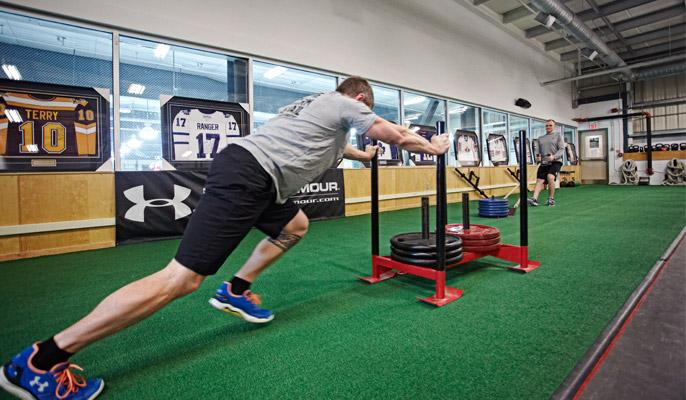
You’re an athlete that’s been training your entire off-season (for example, let’s say you’re a fall sport athlete and have been training all summer long to prepare for your season) and you’ve improved strength, power, speed, mobility, and flexibility. Then, you go into your season and you feel at your best. Then, you just get so caught up in the game, you decide to discontinue your training because your sport should be enough training. On my end, as a strength and conditioning coach, I’m thinking… “Why? All this work throughout the season to become the better version of yourself in all aspects of fitness, and now you’re willing to throw it all away now that you got to where you want to be?”
I don’t necessarily believe it’s because of laziness or the lack of wanting to, I think the problem stems from the unawareness between the players and the coaches on what can be done to maintain strength, and even enhance it. I’m here to tell you in this blog is the reasons why you shouldn’t stop training while you are in-season.
Which brings me into my 3rd reason, performance. It’s a common misconception that training will only fatigue the athlete and make them too sore for performance. Like I stated before intensity, volume, and frequency of training changes because the goals of the program have now changed. The goals have now shifted from performance to injury prevention. You did all the grueling workouts in the off-season, you did the work to where you want to be, now you are now prepared for your in-season workouts which ensures that you don’t run out of gas in the tank… so no, you will not get fatigued or sore from your in-season workouts. If anything, your performance will only increase from here.
My last reason that comes to mind, you will never reach your goals if you keep starting and stopping training. Every athlete that I know has goals whether it may be performance or physique, and they get frustrated why they just get can’t get their numbers up each year in their lifts or their weight, and how it’s always the same. It’s because you’re always taking one step forward in the off-season and one step back in in-season without training. You will always end up back to where you started. Which brings me back to my original question, why? Why do you want to keep doing that?